
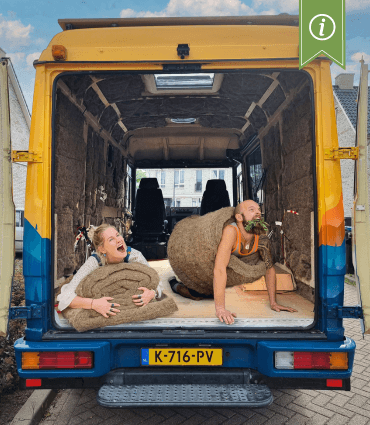
Natural insulationfor campervans and motorhomes
Sheep's wool in van conversions, motorhomes and mobile homes
Why it is used in van conversions
In a van space is tight and surfaces are irregular. Sheep's wool is elastic and cut by hand, adapting to cavities, ribs and curved panels with no need for templates.
It is light, which matters in a vehicle, and releases no irritating dust while being fitted, an advantage when working inside a closed space.
Moisture inside the vehicle
Sheep wool is hygroscopic and open to vapour diffusion (diffusion resistance μ=1): it absorbs water vapour from the air and releases it again when conditions change, without a relevant loss of thermal performance.
In a van, where occupancy generates water vapour in a small volume of air, this behaviour must be paired with adequate ventilation and a carefully assembled build-up.
Thicknesses and products
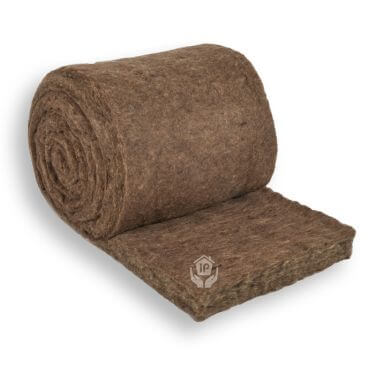
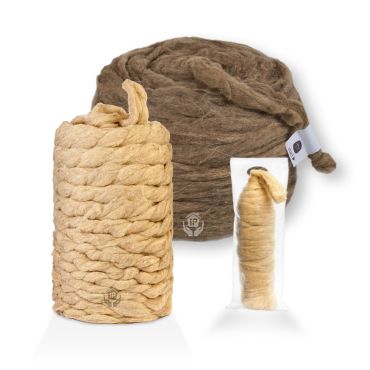
Conversions usually use the lower thicknesses in the range, from 30 mm, fitted between the body ribs. For joints, edges and narrow cavities there is a specific filling product.
The declared thermal conductivity of our rolls is between 0.033 and 0.038 W/mK, with densities from 18 to 30 kg/m³ and thicknesses from 30 to 300 mm, depending on the product.
Recommended products
Products usually chosen in campervan conversions.
Frequently asked questions
- How much wool does a van need?
- It depends on the model and how much of the body will be insulated. State the vehicle in your quote request and we will help estimate quantities.
- Can the wool touch the metal panels?
- The build-up should follow good conversion practice, including panel treatment and ventilation of the layers. We can advise what to consider in your case.
You can also see real projects and the advantages of sheep wool.
Quer saber como a lã natural pode transformar o seu projeto?
Fale connosco e receba aconselhamento personalizado